Executive summary
What existed
Paperturn had value its customers experienced but no shared sentence to describe it. Every department described the product slightly differently, and every piece of marketing competed with itself as a result.
What I built
A cross-functional ICP (sales, product, customer success, and support) that named the marketer (not an industry) as Paperturn’s buyer. Then a strategic narrative on Andy Raskin’s 5-step framework: 30+ drafts written by hand, presented at company kickoff March 2025.
What changed
3 months from narrative kickoff to dashboard redesign
4 → 1 four functions describing the product four ways → one shared story
Defining the ICP
Before the narrative could do anything useful, the company needed to agree on who it was for. Paperturn had historical product-market fit signals with predictable trial and customer volume. What it didn’t have was a single sentence that sales, product, customer success, and support could all use to describe the buyer.
The work happened in four steps:
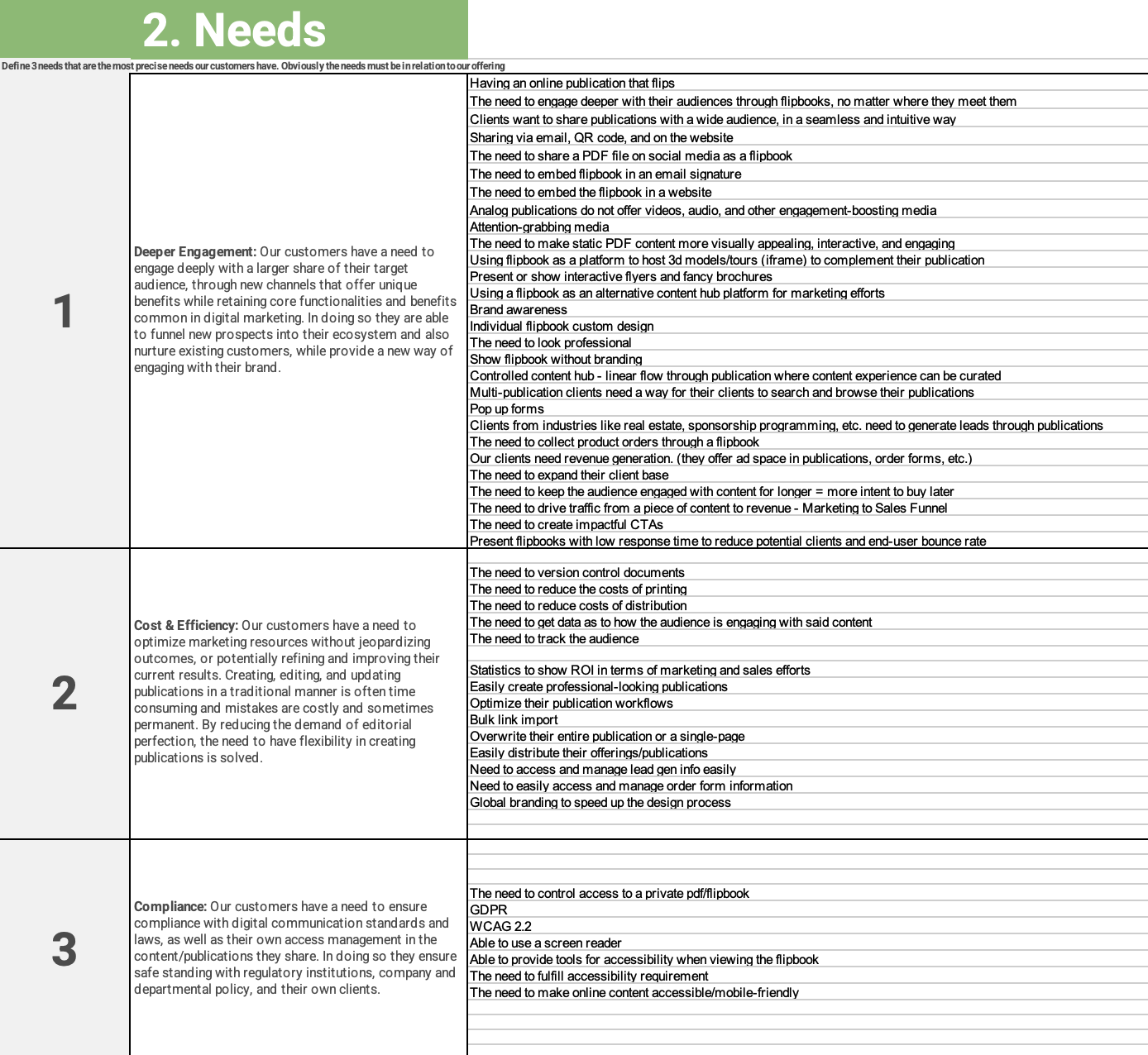
- Interview each function. I sat with sales, product, customer success, and support separately and asked the same two questions: what needs does Paperturn solve, and who is it solving them for? Pure collection. No synthesis yet, no resolving disagreements. Just every working definition in writing.
- Theme the bucket. Once the needs were collected, I grouped them into clusters and looked for the 2–3 core themes that recurred across functions.
- Decide what dimension defines the ICP. This was the foundational analytical move. The themes were horizontal: they showed up across industries, not within one. So the ICP wasn’t industry-defined; it was role-defined. The buyer was the marketer, full stop. Industry became localization layered on top of role, not the targeting axis itself.
- Tailor downstream by industry. With role as the spine, copy and sales conversations could then take on the industry-specific jargon a marketer in fashion or publishing or B2B tech actually uses. Industry was the flavoring; role was the substrate.
Three core themes emerged from the clustering: Deeper Engagement, Cost Efficiency, and Compliance. Each one cut across industries and described a need a marketer experiences regardless of vertical.
The cross-functional ICP work was the unglamorous foundation. It was also what made everything downstream possible.
Why narrative came next
Most marketing teams that inherit a vacancy lead with quick wins: refresh the homepage, rerun the ads, ship a campaign. Most companies treat strategic narrative as a one-time fundraising slide that surfaces during a round and gets shelved after. Both of those defaults treat narrative as decoration on top of a product.
Strategic narrative is the upstream artifact that determines whether marketing can compound. With a shared ICP and a shared story for how to serve them, every channel pulls in the same direction. Without those two things, you spend the next year watching teams optimize against different definitions of what the product is.
Andy Raskin’s framework, applied
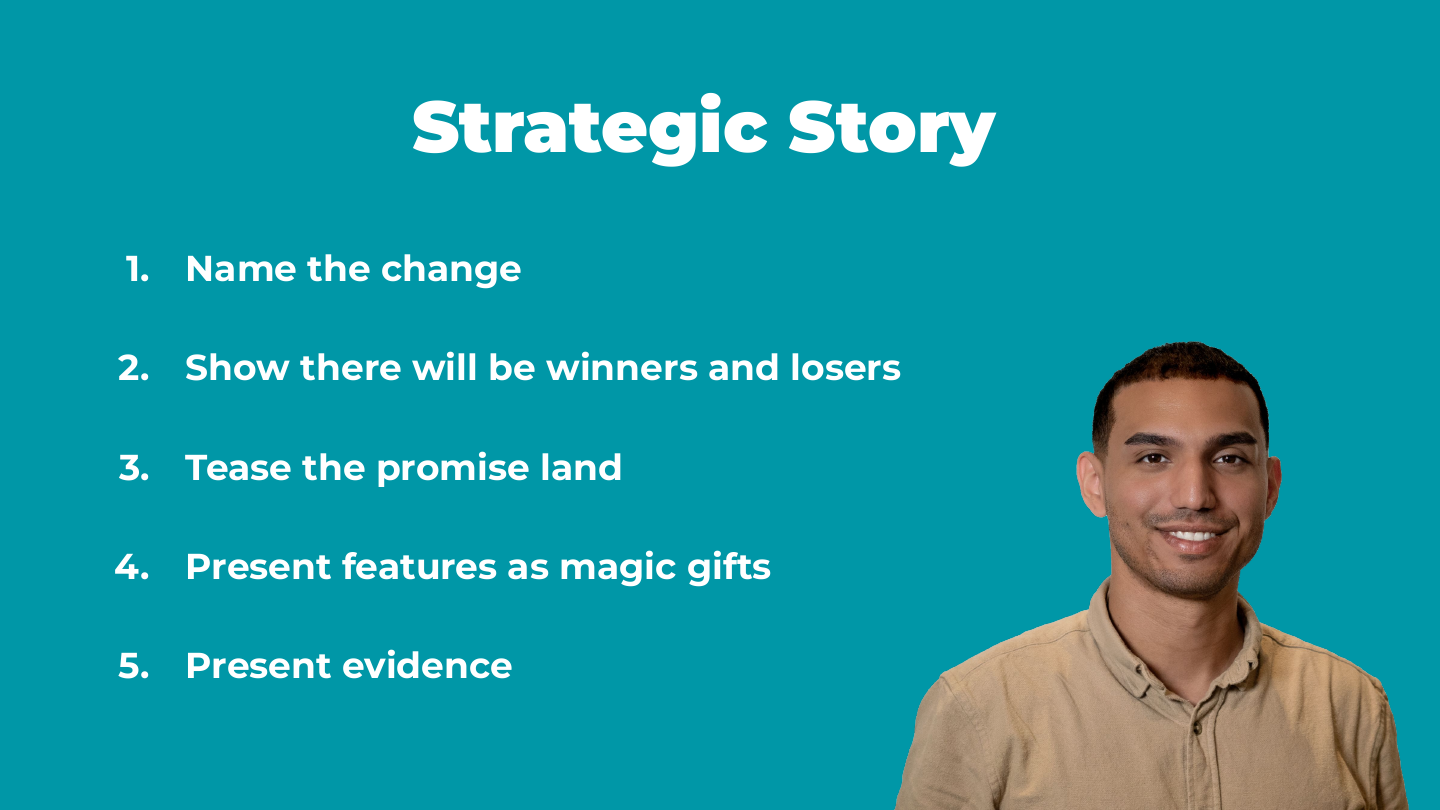
Andy Raskin’s five steps are deceptively simple. Each one is a forcing function that surfaces an assumption the company hasn’t questioned in years.
- Name the change. What just shifted in the world that makes the old way obsolete?
- Winners and losers. Who benefits from the change? Who gets left behind if they don’t adapt?
- The Promised Land. What does the future look like for the winners?
- Features as magic gifts. How does the product help winners reach the Promised Land?
- The best stuff. Why is this the only credible path?
I drafted 10-plus passes of the full narrative, written by hand with no AI assist and one polish pass at the end. Then I presented it at the company kickoff. Audience of thirteen: eight in person, five remote developers. The CEO and the strategic consultant were both in the room.
We are here to help Craft, Share, and Captivate. Bridging our clients’ world to their audiences’ fingertips.
Read the full narrative
1. Name the Big Change in the World
Today, every touchpoint matters — the big ones, the small ones, and the forgotten ones.
Why is this so terrifying? Over the past 30 years, a flood of marketing technology has multiplied marketing initiatives, creating demand for data-driven decision-making at every single customer touchpoint. While these tools are crucial in today’s ecosystem, adding more complexity is simply unsustainable. These new media technologies have unleashed an unstoppable wildfire of change:
- Interactive formats now overshadow static digital communication
- Print and traditional ads face near-extinction
- Engagement metrics keep raising performance expectations
- Skill gaps grow wider with every new platform and channel
Marketers simultaneously crave new growth yet fear it because this technology has become the backbone of business operations, and they are coping with endless additions that fall underneath their responsibility. The stakes have never been higher. Yesterday’s simplicity is gone; endless change is the new normal.
2. Show There Will Be Winners and Losers
And there is no stopping this revolution. To survive and succeed, marketers must expand — but in smarter ways. After all, attention is still the ultimate currency in marketing. And they must leverage every opportunity.
Nothing really changed. But leading marketers see the risks of adding more complexity. They’re challenging the status quo, refusing to chase every new trend blindly.
Those who fail to act — who layer complexity needlessly — will end up as B-tier players. Some may soon be forgotten altogether.
3. Tease the Promised Land
However, something stands in the way. The requirement to expand marketing initiatives in an already resource-strained environment creates a dilemma. Marketers dream of easy ways to repurpose assets and extend their reach, but within realistic budgets and skill sets. They want technology that empowers them to build on timeless marketing insights.
Yet, this is rare.
In reality, marketing teams face a tornado of constraints. Countless assets get used only once, and new trends quickly cannibalize old formats. Adopting more high-priced tools with lengthy integrations breeds analysis paralysis and priority conflicts. Small but powerful touchpoints are forgotten, robbing companies of potential growth.
How did we end up here? Marketers create trends, yet they’re also victims of them. Tools and solutions overpromise but under-deliver, draining hundreds of hours in implementation. New doesn’t necessarily mean better, and focusing only on the latest shiny toy neglects simplicity and efficiency.
4. Present Features as Magic Gifts
So we began to think… what if marketing professionals could breathe new life into their content easily, creating enduring touchpoints that generate continuous engagement — without requiring advanced technical expertise?
What if uploading your static content was all it took to launch a fresh, interactive marketing channel, allowing it to live on in an engaging format?
That is why we built Paperturn. Paperturn is a digital publishing platform that unites the ageless familiarity of page-turning with modern interactive technology, enabling marketers to transform PDFs effortlessly into immersive flipbooks.
With Paperturn:
- The Interactivity Builder quickly brings old content back to life. Effortlessly embed videos, links, and calls-to-action — unlocking fresh ways to captivate your audience.
- The Engagement Launcher makes instant, global distribution of your flipbooks a breeze. Copy, paste, and share across channels, all in a matter of seconds.
- The Outcome Amplifier pairs real-time insights with top-tier customer support, keeping you laser-focused on what matters most: maximizing ROI.
Generate demand through content that captivates without piling on needless complexity, cost, and frustration.
5. Hit Them With Your Best Stuff
Over 4,000 customers already trust Paperturn to amplify their content’s impact. Across 40,000+ publications and hundreds of millions of turned pages, they’ve captured over 50 million minutes of audience attention.
With an average session length of 6 minutes and 28 seconds — 100× more than what typical digital content achieves.
These results translate into deeper brand recall, better leads, and real-world ROI.
This is for companies looking to stand out in a noisy marketplace. With Paperturn, your content becomes memorable, your workflow stays sane, and you bridge timeless strategies with modern engagement methods.
We are here to help Craft, Share, and Captivate. Bridging our clients’ world to their audiences’ fingertips.
What the narrative produced
Three downstream changes in the months that followed. Not because I’d planned them, but because once a company has a shared ICP and a shared story for how to serve it, coherence is what falls out.
1. Marketing copy reoriented around the marketer’s pain. Hooks, headers, ad copy, landing pages, designs: all of it began to revolve around the ICP’s specific pain points rather than the product’s features. Once the narrative named what marketers actually struggled with in writing, every new piece of copy reached for that vocabulary.
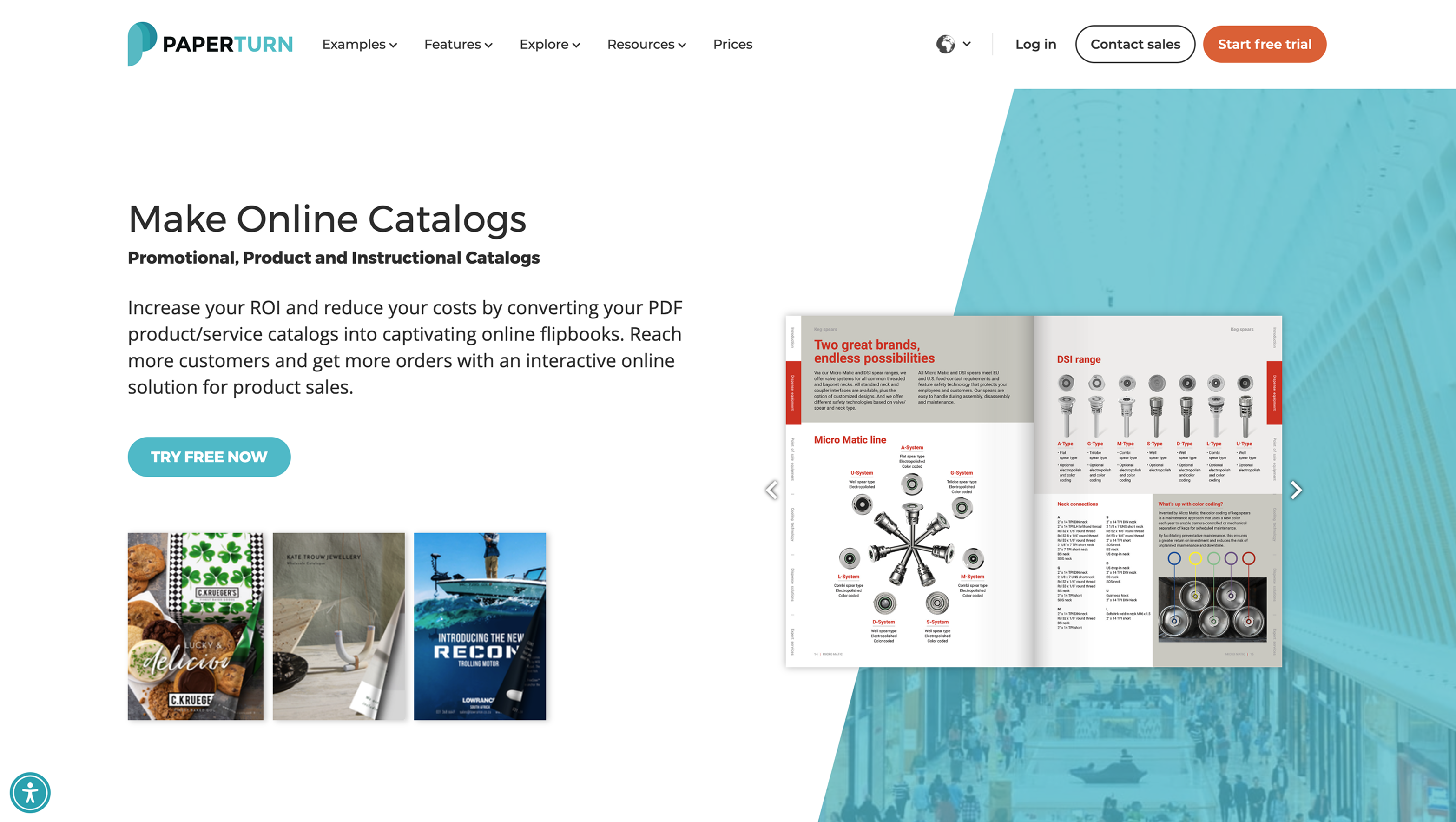
2. Sales vocabulary expanded. Before the narrative, the sales team described the product in product terms: features, capabilities, integrations. After, they described it in the buyer’s terms: pain points, use cases, the jobs the marketer was trying to do. The vocabulary expansion was the deepest shift, because it meant sales had internalized who they were selling to. They started speaking the marketer’s language in customer conversations.
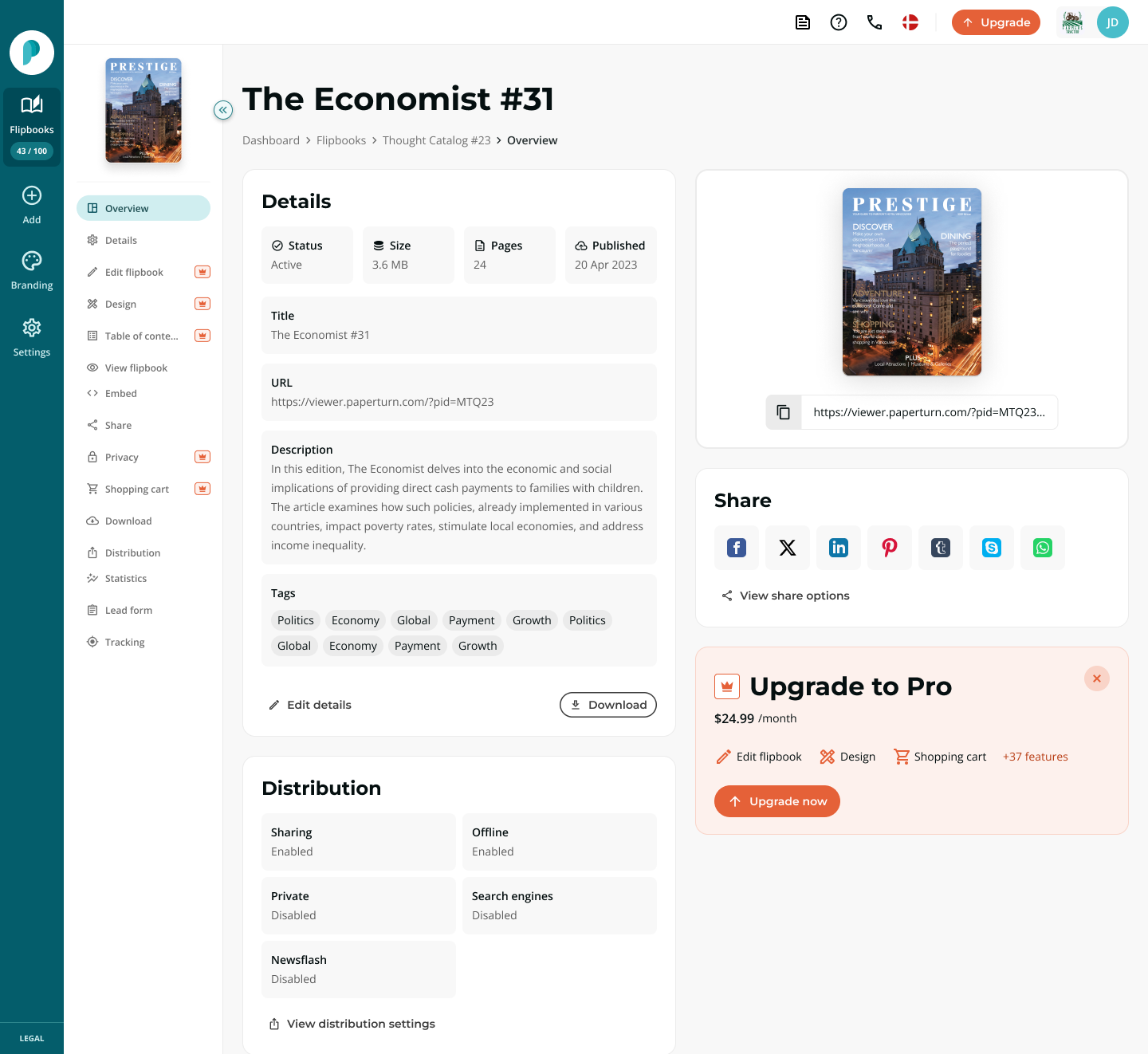
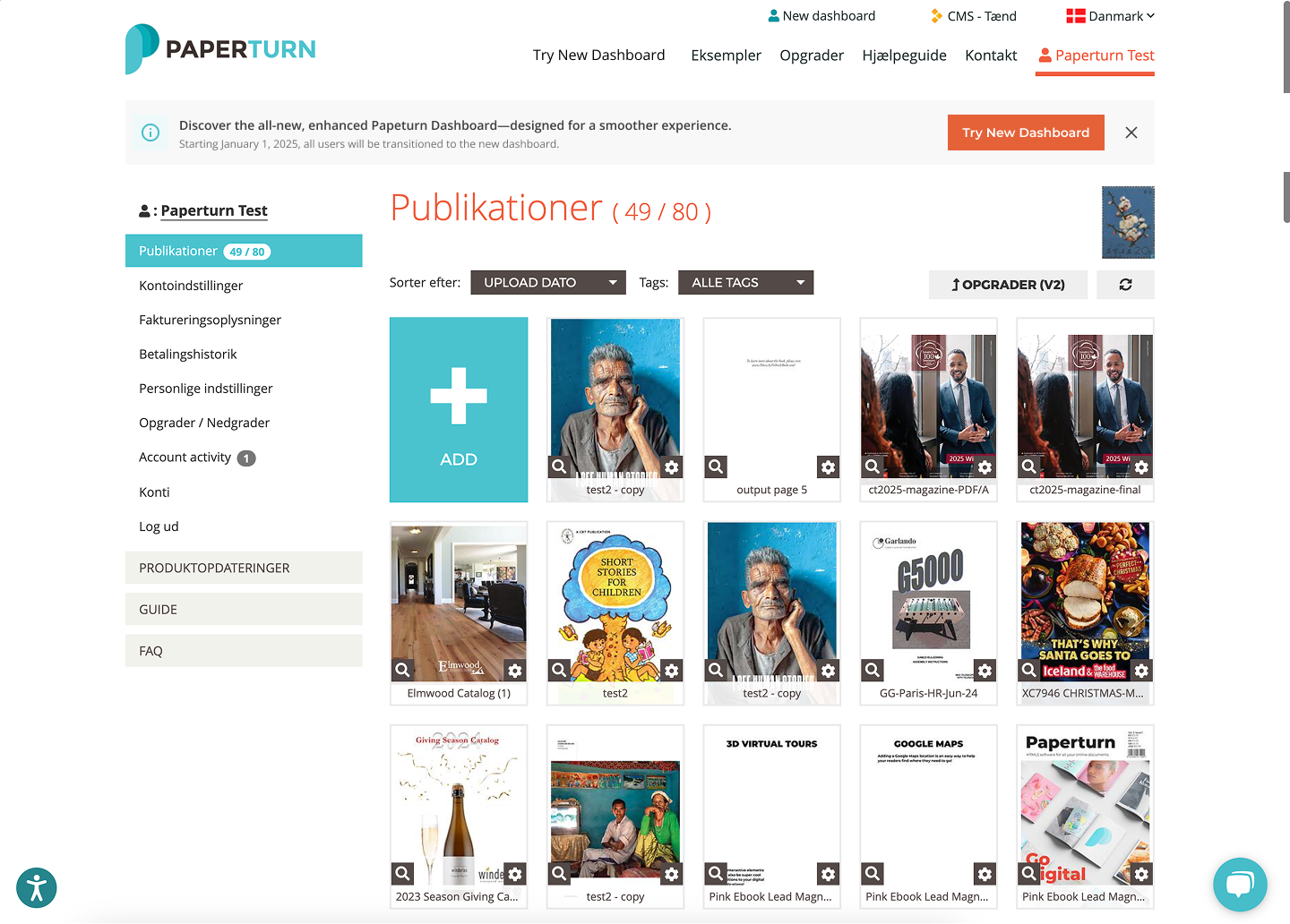
3. The dashboard redesign. Three months after the kickoff, the product team shipped a dashboard redesign organized around three value pillars: Create, Share, Analyze. Different words from my closing line (Craft, Share, Captivate), but the same structure and the same logic. The narrative had moved from the doc to the deck to the design.
Two further effects landed at a different altitude. The narrative helped us see what category we were actually in. We knew Paperturn made online flipbooks. We knew flipbooks lived in publishing. What we hadn’t seen until the narrative was that flipbooks also lived inside marketing technology, and that marketing technology was the bigger market we were really competing in. Naming that expanded our awareness of the broader landscape: who else was solving the marketer’s problem, what tools they used, and where Paperturn fit alongside them. Second, with a defined ICP and a settled sense of where we lived in the market, industry-by-industry research stopped being open-ended. We knew what the buyer cared about, so we knew what to look for in go-to-market planning.
Most SaaS companies treat the strategic narrative as a slide. Mine ended up shipping in the product.